Water Extraction and Removal in Compton, CA
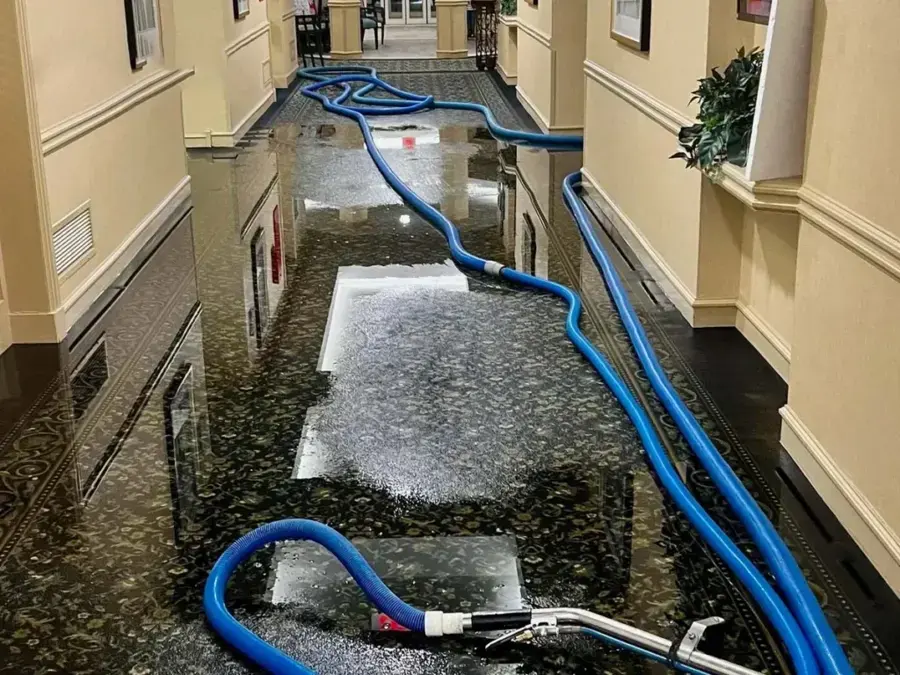
Standing water keeps wicking into drywall, baseboards and the subfloor until it is pulled out. The extraction crew removes it with truck-mounted extraction, then maps what is still wet.
(888) 563-9619Water still spreading? Call the Compton crew- IICRC S500 drying goal
- Truck-mounted extraction
- Daily moisture logs
What to do right now about water extraction and removal
- 1
Stop the source
Close the fixture valve or the main shutoff at the meter box or the house valve.
- 2
Kill wet circuits
If the breaker panel is dry and safe to reach, switch off circuits in the wet rooms.
- 3
Photograph first
Take wide and close photos of every wet room before moving anything.
- 4
Lift and move
Get rugs, cords, boxes and furniture legs off the wet floor, then call for extraction.
How the restoration team handles water extraction and removal in Compton
- 01
Map the moisture
The tech who does the walkthrough maps moisture with a pinless meter and thermal imaging before any equipment goes down, so the plan matches what is actually wet.
- 02
Extract the water
The extraction crew pulls standing water with truck-mounted extraction so it leaves the building instead of wicking into the next room.
- 03
Dry the structure
The drying team sets air movers to the evaporation load of each room and runs LGR dehumidifiers, with desiccants for dense Class 4 materials.
- 04
Verify and document
Readings are logged daily, and the equipment comes out only when wet materials sit within 2 to 4 points of a dry reference in the same building.
What does water extraction and removal cost in Compton, CA?
In Compton, CA, water extraction typically runs $400 to $1,500 for the extraction visit itself, and $1,500 to $6,000 once structural drying is included, depending on the water category, the square footage and how fast drying starts.
One room, clean water
- Truck-mounted extraction
- Moisture map
- Carpet and pad pressed out
Several rooms or a unit
- Multi-room extraction
- Baseboard and tack strip checks
- Photo log for the file
Extraction plus drying
- Air movers and LGR dehumidifiers
- Daily readings
- Dry verification
For a planning number, try the Compton water damage cost calculator. A firm figure comes from the walkthrough and the moisture map.
Extraction is the cheapest drying there is. A gallon of water pulled out with a wand never has to be evaporated by an air mover, so the extraction crew removes as much liquid as possible before any drying equipment goes down. In Compton that often means water on slab floors in single-story homes, carpet in garden apartments and tile in kitchens and baths.
How standing water gets pulled out of a Compton home
The restoration team works from the lowest, wettest point outward:
- Truck-mounted extraction units pump the water straight out to the truck, so it leaves the building instead of moving to the next room.
- Weighted extraction tools press water out of carpet and pad; a light wand pass leaves far more behind.
- Squeegees and floor tools clear sealed concrete and tile on slab homes.
- Portable extractors reach upstairs units and courtyard apartments where hoses cannot run from the street.
Why extraction is only the first step
Once the floor looks dry, water is still sitting in the bottom of the drywall, under the baseboards and inside the pad. The tech who does the walkthrough maps it with a pinless meter and thermal imaging, then the drying team sets air movers and LGR dehumidifiers for structural drying. If the water came from a toilet, a drain or the street, it is Category 2 or 3 and the plan changes: porous materials it touched come out rather than get dried. See sewage backup cleanup for that protocol.
Water still on the floor in Compton? Shut the source off if it is safe, stay off wet floors near outlets, and call for extraction.
(888) 563-9619What makes Compton extraction jobs different
Most Compton homes are single-story, so water spreads sideways across a slab or down into a short crawl space instead of into a basement. Slab homes push water under baseboards and into tack strip; raised wood floors let it drain below, where it sits in the crawl space unless someone pumps it out. The mitigation team checks both. The Federal Emergency Management Agency lists safety steps for entering a wet home at Ready.gov floods, and the EPA explains why materials need to be dry within 24 to 48 hours at EPA mold and moisture.
Do not run a household vacuum on it
A shop vacuum on a wet carpet removes a fraction of what truck-mounted extraction pulls, and a household vacuum on standing water is an electrical hazard. Leave the heavy water to the extraction crew.
Compton, CA and the Hub City neighbors
The Compton restoration crew covers every Compton ZIP, 90220 through 90224, plus Lynwood, Paramount, Carson, Gardena, Willowbrook, Rancho Dominguez, North Long Beach, Bellflower and South Gate.
Give the cross street and which room is wet so the right extraction and drying gear goes out on the first trip.
See every neighborhood and ZIP coveredWater Extraction and Removal questions
How much water can a truck-mounted unit remove?
A truck-mounted extraction unit moves far more water than any portable machine, and it sends the water out to the truck instead of into a bucket that has to be emptied. On a flooded slab home that is the difference between a clean pull and water left under the baseboards.
Can wet carpet be saved after extraction?
Often, if the water was clean and extraction and drying start quickly. Carpet over a wet pad is usually pressed out with weighted tools and dried in place, while a soaked pad is sometimes pulled and replaced. Carpet touched by Category 3 water is removed.
Why is the floor still damp after extraction?
Extraction removes liquid water, not the water that has soaked into drywall, baseboards, pad and the slab surface. That remaining moisture is removed by air movers and dehumidifiers over the following days.
What should I move before extraction starts?
Rugs, electronics, boxes, papers and anything sitting on the floor. Put foil or plastic under furniture legs so stains do not transfer into wet carpet.
Is extracted water from a toilet treated differently?
Yes. Toilet overflow is at least Category 2, and it is Category 3 if it came from the sewer side. The crew uses protective gear, and porous materials the water touched are usually removed instead of dried.
Does homeowners insurance pay for water extraction?
Extraction is part of mitigation, and a sudden, accidental discharge such as a burst supply line is commonly covered. Coverage depends on your policy, so it is worth checking with your own insurer. The moisture map and photos support the claim either way.
How is extraction handled in an upstairs apartment?
Portable extractors and long hose runs reach upper units in courtyard buildings. The unit below is checked with a meter at the same visit, because water that leaves the floor above usually shows up in the ceiling below.
Water on a Compton floor right now?
The extraction crew pulls it out, maps what is still wet and sets the drying plan the same visit.