Structural Drying and Dehumidification in Compton, CA
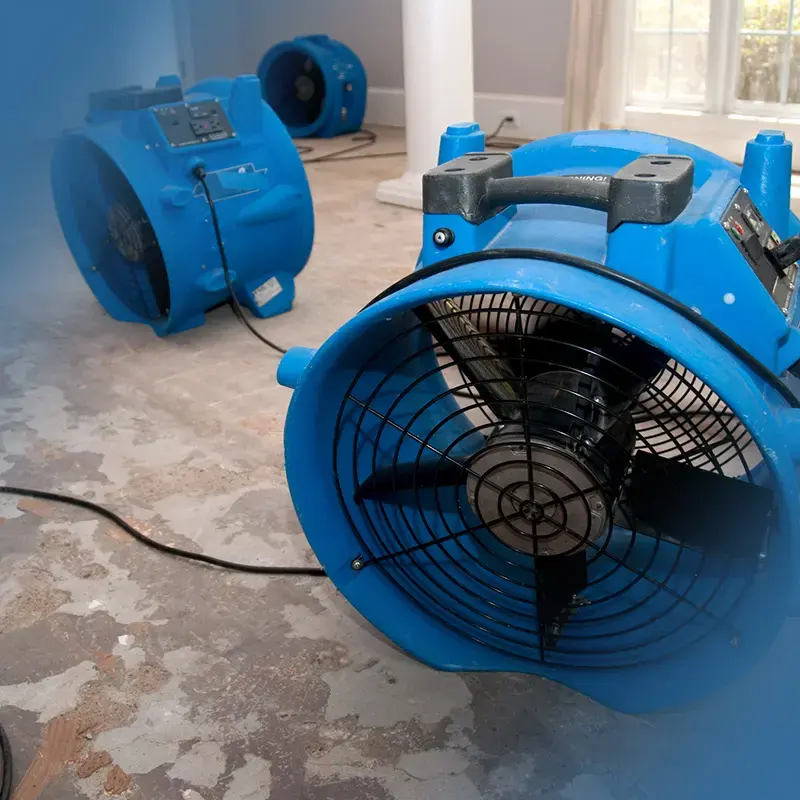
A floor that looks dry can still hold water in the drywall, framing and slab. The drying team dries the structure itself, not just the surface, and the equipment stays until the readings say dry.
(888) 563-9619Call for emergency water removal in Compton- IICRC S500 drying goal
- Truck-mounted extraction
- Daily moisture logs
What to do right now about structural drying and dehumidification
- 1
Stop the water
Make sure the leak or source is shut off before any drying begins.
- 2
Leave the equipment running
Once set, keep air movers and dehumidifiers on and plugged in around the clock.
- 3
Keep windows closed
Closed windows let the dehumidifiers control the air instead of pulling in humid air.
- 4
Keep a note of changes
Note any new stains, smells or swelling for the next daily reading.
How the restoration team handles structural drying and dehumidification in Compton
- 01
Map the moisture
The tech who does the walkthrough maps moisture with a pinless meter and thermal imaging before any equipment goes down, so the plan matches what is actually wet.
- 02
Extract the water
The extraction crew pulls standing water with truck-mounted extraction so it leaves the building instead of wicking into the next room.
- 03
Dry the structure
The drying team sets air movers to the evaporation load of each room and runs LGR dehumidifiers, with desiccants for dense Class 4 materials.
- 04
Verify and document
Readings are logged daily, and the equipment comes out only when wet materials sit within 2 to 4 points of a dry reference in the same building.
What does structural drying and dehumidification cost in Compton, CA?
In Compton, CA, structural drying typically runs $1,000 to $6,000, depending on the class of the loss, how many rooms and materials are wet, whether dense materials like hardwood and slabs need desiccants or drying mats and how many days of equipment it takes.
Class 1 or 2, one room
- Moisture map
- Air movers and LGR
- Daily readings
Class 2 or 3, several rooms
- Wall cavity venting
- More equipment
- Psychrometric logs
Class 4, dense materials
- Desiccant or mats
- Hardwood and slab drying
- Dry verification
For a planning number, try the Compton water damage cost calculator. A firm figure comes from the walkthrough and the moisture map.
Structural drying is the part of a water loss that decides whether the problem comes back. Drywall wicks water up from the floor, framing absorbs it, and a concrete slab holds it for days. Drying only the surface leaves water inside the materials, where it causes swelling, odor and mold. IICRC S500 is the industry standard for doing it right, and it is built around measurement rather than guesswork.
How a structural dry-out works
- Moisture mapping. The tech who does the walkthrough reads walls, floors and framing with pinless and penetrating meters and thermal imaging, and takes a reading from a dry reference in an unaffected room.
- Classifying the loss. Class 1 through 4 describes how much water and which materials are wet, and it sets how much equipment each room needs.
- Setting equipment. Air movers are placed to the room's evaporation load, and LGR (low grain refrigerant) dehumidifiers pull the evaporated water out of the air. Desiccant dehumidifiers handle dense Class 4 materials like hardwood and concrete.
- Daily readings. The drying team records material readings and psychrometric readings (temperature and humidity) every day and adjusts the setup.
When is it dry?
Not on a calendar date. Materials are dry when they read within 2 to 4 points of the dry reference material in the same building. A contained Class 1 loss usually gets there in three to five days; hardwood, plaster and slabs take longer. The equipment stays until the readings say dry, not until it looks dry.
Wet walls or floors in Compton after a leak? Call to have them mapped and dried to the S500 goal.
(888) 563-9619Drying in Compton's climate
Compton's air is dry for much of the year, which helps evaporation, but coastal marine layer mornings and rainy winter weeks raise indoor humidity. That is why dehumidification, not open windows, controls the drying. The EPA explains the moisture and mold connection at EPA mold and moisture, and the EPA indoor air quality pages cover humidity at home.
Why the file needs the readings
Daily moisture and psychrometric logs show the adjuster what was wet, how it was dried and when it reached the goal. They are the backbone of the claim file.
Compton, CA and the Hub City neighbors
The Compton restoration crew covers every Compton ZIP, 90220 through 90224, plus Lynwood, Paramount, Carson, Gardena, Willowbrook, Rancho Dominguez, North Long Beach, Bellflower and South Gate.
Give the cross street and which room is wet so the right extraction and drying gear goes out on the first trip.
See every neighborhood and ZIP coveredStructural Drying and Dehumidification questions
What is IICRC S500?
IICRC S500 is the industry standard for professional water damage restoration. It sets how losses are classified, how drying is done and how it is verified.
Why not just open the windows and use fans?
Fans move water from materials into the air, and without dehumidification that water stays in the room or soaks back in. LGR dehumidifiers remove it; open windows can let humid air in.
How loud is the drying equipment?
Air movers are noisy, roughly like a strong box fan, and they run around the clock. Most people can stay home during a clean-water dry-out.
How much does running the equipment add to the power bill?
Air movers and dehumidifiers draw steady power for several days. The added cost is usually modest compared with the damage it prevents, and some policies reimburse it.
Can hardwood floors be dried in place?
Often, with drying mats or panels that pull water up through the boards, if drying starts quickly. Boards that have cupped badly may still need replacing.
What is a dry reference reading?
A reading taken from the same type of material in a part of the house that did not get wet. The wet materials are dried until they match it within a few points.
How long does structural drying take?
A contained Class 1 loss usually dries in three to five days. Class 3 and 4 losses, hardwood, plaster and slabs take longer.
Need a Compton home dried to standard?
The drying team maps the moisture, sets the equipment and keeps it running until every reading hits the goal.