Slab Leak Water Damage in Compton, CA
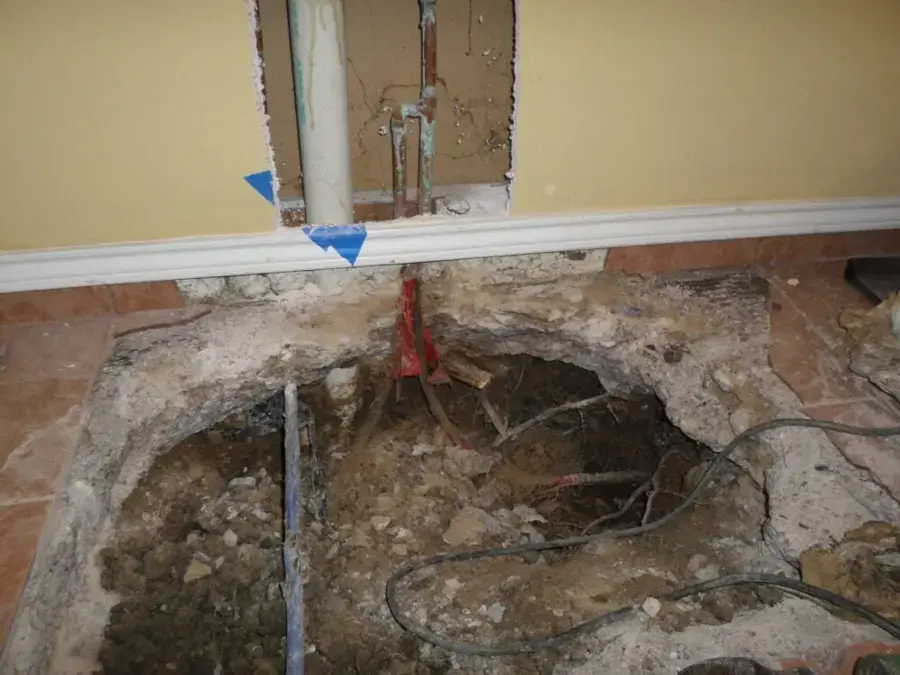
A leak under the slab soaks flooring from below, often for weeks before anyone sees it. The restoration team maps how far it spread, removes what cannot be dried and dries the rest.
(888) 563-9619Start the Hub City dry-out now- IICRC S500 drying goal
- Truck-mounted extraction
- Daily moisture logs
What to do right now about slab leak water damage
- 1
Shut off the main
Close the house shutoff or the meter valve so the line under the slab stops feeding water.
- 2
Check the water heater
If the hot spot suggests a hot-side leak, turn the water heater to vacation or off.
- 3
Document the floor
Photograph wet grout, cupped boards and any warm spots before anything is lifted.
- 4
Call for a moisture map
Call so the restoration team can map how far the water spread under the flooring.
How the restoration team handles slab leak water damage in Compton
- 01
Map the moisture
The tech who does the walkthrough maps moisture with a pinless meter and thermal imaging before any equipment goes down, so the plan matches what is actually wet.
- 02
Extract the water
The extraction crew pulls standing water with truck-mounted extraction so it leaves the building instead of wicking into the next room.
- 03
Dry the structure
The drying team sets air movers to the evaporation load of each room and runs LGR dehumidifiers, with desiccants for dense Class 4 materials.
- 04
Verify and document
Readings are logged daily, and the equipment comes out only when wet materials sit within 2 to 4 points of a dry reference in the same building.
What does slab leak water damage cost in Compton, CA?
In Compton, CA, slab leak water damage restoration typically runs $1,500 to $7,500 or more, not counting the plumbing repair, depending on how long the leak ran, the flooring type and how much of the slab and walls got wet.
Caught early, one room
- Moisture mapping
- Baseboard removal
- Slab and wall drying
Long-running leak
- Flooring removal
- Drying mats and LGR units
- Daily readings
Multi-room or hardwood
- Wide flooring removal
- Wall cavity drying
- Full claim documentation
For a planning number, try the Compton water damage cost calculator. A firm figure comes from the walkthrough and the moisture map.
Many Compton homes built from the 1940s through the 1960s sit on concrete slabs with copper water lines running through or under the concrete. Over decades, hard water, soil movement and pipes rubbing against rebar or gravel wear pinholes into those lines. The water has nowhere to go but up through the slab and out into flooring, baseboards and the bottom of the walls.
Signs of a slab leak in a Compton home
- A warm or hot spot on the floor, which points to a leak on the hot side
- Wet grout lines, lifting tile or laminate that swells and cups
- Carpet that stays damp along one wall with no leak above it
- The water meter dial moving with every fixture turned off
- A water bill that jumps with no change in use, or the sound of running water under the floor
The slab leak warning check weighs these signs in a minute. The EPA notes that household leaks waste thousands of gallons a year at EPA WaterSense Fix a Leak Week.
Repair first, then the dry-out
A plumber locates and repairs the line, by spot repair through the slab, rerouting the line through the attic or walls, or repiping. The water damage work happens around that repair. The tech who does the walkthrough uses thermal imaging and meters to map how far the moisture spread under the flooring, since a slab leak can wet a whole hallway while the visible damage is one tile.
How a wet slab gets dried
- Floating floors, laminate and wet carpet pad usually come up so air can reach the concrete.
- Baseboards come off and small holes may go into the bottom of the drywall to vent the wall cavity.
- Air movers, LGR dehumidifiers and sometimes drying mats pull water out of the slab surface.
- Readings are taken daily until the slab and walls reach the drying goal.
Warm spot on the floor or a meter that will not stop? Shut off the main and call the Compton restoration crew.
(888) 563-9619Concrete dries slowly
A slab holds water far longer than drywall. A contained slab leak usually dries in three to five days after the repair, but a long-running leak under tile or hardwood can take longer, and the equipment stays until the readings say dry.
Compton, CA and the Hub City neighbors
The Compton restoration crew covers every Compton ZIP, 90220 through 90224, plus Lynwood, Paramount, Carson, Gardena, Willowbrook, Rancho Dominguez, North Long Beach, Bellflower and South Gate.
Give the cross street and which room is wet so the right extraction and drying gear goes out on the first trip.
See every neighborhood and ZIP coveredSlab Leak Water Damage questions
How do I know if I have a slab leak or just a spill?
A spill dries on its own. A slab leak keeps coming back: grout stays dark, laminate keeps swelling, or the carpet along one wall never dries. Turn every fixture off and watch the water meter; if the dial still moves, water is leaving the pipes somewhere.
Does the floor always have to come up?
Not always. Carpet can sometimes be lifted and dried with the pad replaced, and tile over a slab can sometimes be dried in place. Laminate, engineered wood and vinyl plank usually trap water, so they often come up so the slab can dry.
Who fixes the pipe under the slab?
A plumber repairs or reroutes the line. The water damage work, meaning mapping, removal of wet materials and drying, is a separate job that happens around the repair.
How long does a slab take to dry?
A contained slab leak usually dries in three to five days with air movers and dehumidifiers running. Long-running leaks, dense tile setting beds and hardwood take longer, and the equipment comes out only when the readings reach the goal.
Is slab leak water damage covered by insurance?
Many policies cover the sudden water damage from a slab leak, and some cover the cost to access the pipe, while the pipe repair itself is often excluded. Coverage depends on your policy, so it is worth checking with your own insurer.
Why do Compton homes get so many slab leaks?
A large share of Compton homes were built on slabs in the post-war decades with copper lines in or under the concrete. Hard Southern California water, soil movement and pipe wear over sixty or more years make pinhole leaks common.
Can mold grow under the flooring from a slab leak?
It can when the leak runs long. Mold can start growing within 24 to 48 hours on wet organic materials, which is why wet pad, tack strip and the bottom of drywall get checked and removed if they stay wet.
Warm floor or wet grout in Compton?
The restoration team maps the slab, pulls what cannot be dried and runs the drying equipment until the readings say dry.