Burst Pipe Cleanup in Compton, CA
A split supply line can move hundreds of gallons an hour into a single-story home. The extraction crew pulls the water, then the drying team dries the wall cavities it soaked.
(888) 563-9619Speak with 24/7 Compton dispatch- IICRC S500 drying goal
- Truck-mounted extraction
- Daily moisture logs
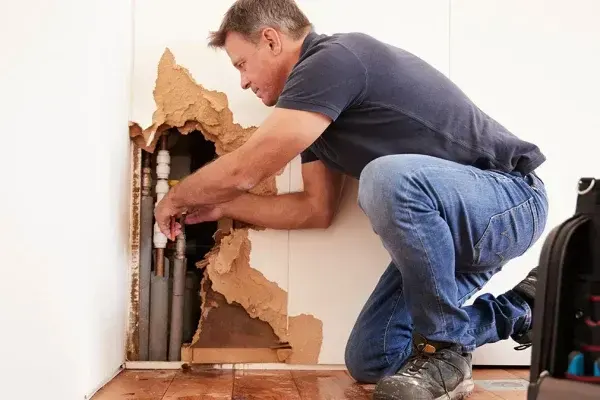
What to do right now about burst pipe cleanup
- 1
Close the main
Turn the house shutoff clockwise, or the curb valve in the meter box, until the water stops.
- 2
Open a low faucet
Open a faucet at the lowest point to drain pressure from the lines.
- 3
Keep clear of power
Stay out of water near outlets and switch off wet circuits if the panel is dry.
- 4
Photograph the break
Photograph the pipe and every wet room before anything is removed, then call.
How the restoration team handles burst pipe cleanup in Compton
- 01
Map the moisture
The tech who does the walkthrough maps moisture with a pinless meter and thermal imaging before any equipment goes down, so the plan matches what is actually wet.
- 02
Extract the water
The extraction crew pulls standing water with truck-mounted extraction so it leaves the building instead of wicking into the next room.
- 03
Dry the structure
The drying team sets air movers to the evaporation load of each room and runs LGR dehumidifiers, with desiccants for dense Class 4 materials.
- 04
Verify and document
Readings are logged daily, and the equipment comes out only when wet materials sit within 2 to 4 points of a dry reference in the same building.
What does burst pipe cleanup cost in Compton, CA?
In Compton, CA, burst pipe cleanup typically runs $1,200 to $6,500, depending on how long the pipe ran, how many rooms and wall cavities got wet, the flooring and how fast drying started.
Caught fast, one wall
- Extraction
- Baseboard and insulation removal
- Wall cavity drying
Several rooms
- Flood cuts where needed
- Air movers and LGR units
- Daily moisture logs
Hours of flow
- Ceiling and floor drying
- Flooring removal
- Full claim documentation
For a planning number, try the Compton water damage cost calculator. A firm figure comes from the walkthrough and the moisture map.
Compton rarely freezes, so pipes here burst for other reasons: a fitting that finally lets go, water pressure that runs high in parts of the city, a failed angle stop under a sink, or a line that shifts during a small earthquake. However it happens, a pressurized supply line releases water fast, and the damage spreads inside the wall long before it shows on the paint.
What a burst pipe does inside the walls
Supply lines run through wall cavities and, in raised-floor homes, across the crawl space. When one splits, the water runs down the inside of the drywall, soaks the insulation and the bottom plate, and spreads under the flooring. The tech who does the walkthrough uses thermal imaging to follow it, because the wet area inside the wall is usually larger than the wet spot on the floor.
The cleanup, step by step
- Water is shut off at the main and the extraction crew pulls standing water from floors and carpet.
- Wet insulation comes out, since it holds water against the framing and rarely dries in place.
- Baseboards come off and small vent holes or flood cuts open the wall so air reaches the cavity.
- Air movers and LGR dehumidifiers run until readings in the framing and drywall reach the drying goal.
Pipe still spraying? Close the main shutoff first, then call the Compton restoration crew for extraction.
(888) 563-9619Documenting a sudden pipe break
A burst supply line is the textbook sudden and accidental loss. The claim file is stronger with timestamped photos of the break before any wall is opened, the moisture map, daily drying logs and the category and class of the loss. The California Department of Insurance explains how homeowners claims work at insurance.ca.gov, and Ready.gov earthquakes covers checking gas and water lines after a quake.
Know where the shutoff is
In most Compton homes the main shutoff is a valve where the line enters the house or a curb valve in the meter box at the sidewalk. Finding it before an emergency saves gallons of water.
Compton, CA and the Hub City neighbors
The Compton restoration crew covers every Compton ZIP, 90220 through 90224, plus Lynwood, Paramount, Carson, Gardena, Willowbrook, Rancho Dominguez, North Long Beach, Bellflower and South Gate.
Give the cross street and which room is wet so the right extraction and drying gear goes out on the first trip.
See every neighborhood and ZIP coveredBurst Pipe Cleanup questions
What causes pipes to burst in Compton if it rarely freezes?
Aging fittings, failed angle stops and supply hoses, high water pressure, corrosion inside older galvanized lines and small ground movements are the usual causes here. Freezing is rare in Compton.
Does the drywall have to be cut?
Not always. Wet drywall can often be dried by venting the cavity through small holes behind the baseboard. Drywall is cut when insulation is soaked, when the water was contaminated, or when readings show the cavity will not dry otherwise.
How long does burst pipe drying take?
A contained Class 1 or 2 loss usually dries in three to five days. Hardwood, plaster walls and long-running leaks take longer.
Should I turn off the water heater too?
If the break is on the hot side or the house will be without water for a while, set the water heater to vacation or off so it is not heating an empty or draining tank.
Is a burst pipe covered by homeowners insurance?
Sudden and accidental discharge from a plumbing system is commonly covered, while the repair of the pipe itself and long-term leaks may not be. Coverage depends on your policy, so it is worth checking with your own insurer.
Can I stay in the house during drying?
Usually, yes. Air movers and dehumidifiers make noise and warm the rooms, but most families stay home during a clean-water dry-out.
What if the water reached the crawl space?
In raised-floor homes the crew checks the crawl space at the same visit, pumps out standing water and dries the subfloor and joists from below.
Burst pipe flooding a Compton home?
Close the main, then call. The extraction crew pulls the water and the drying team dries the walls it reached.